|
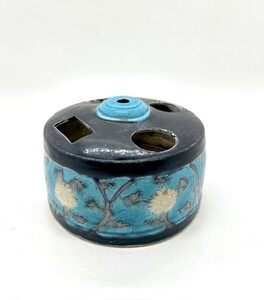
Ming dynasty, first half of 16th century
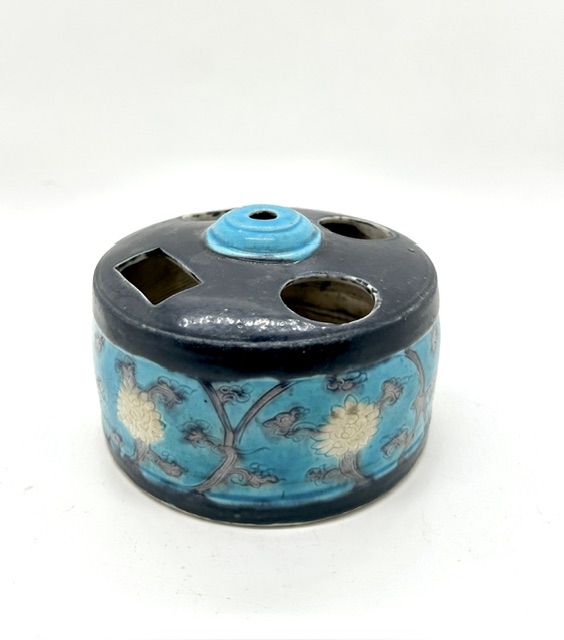
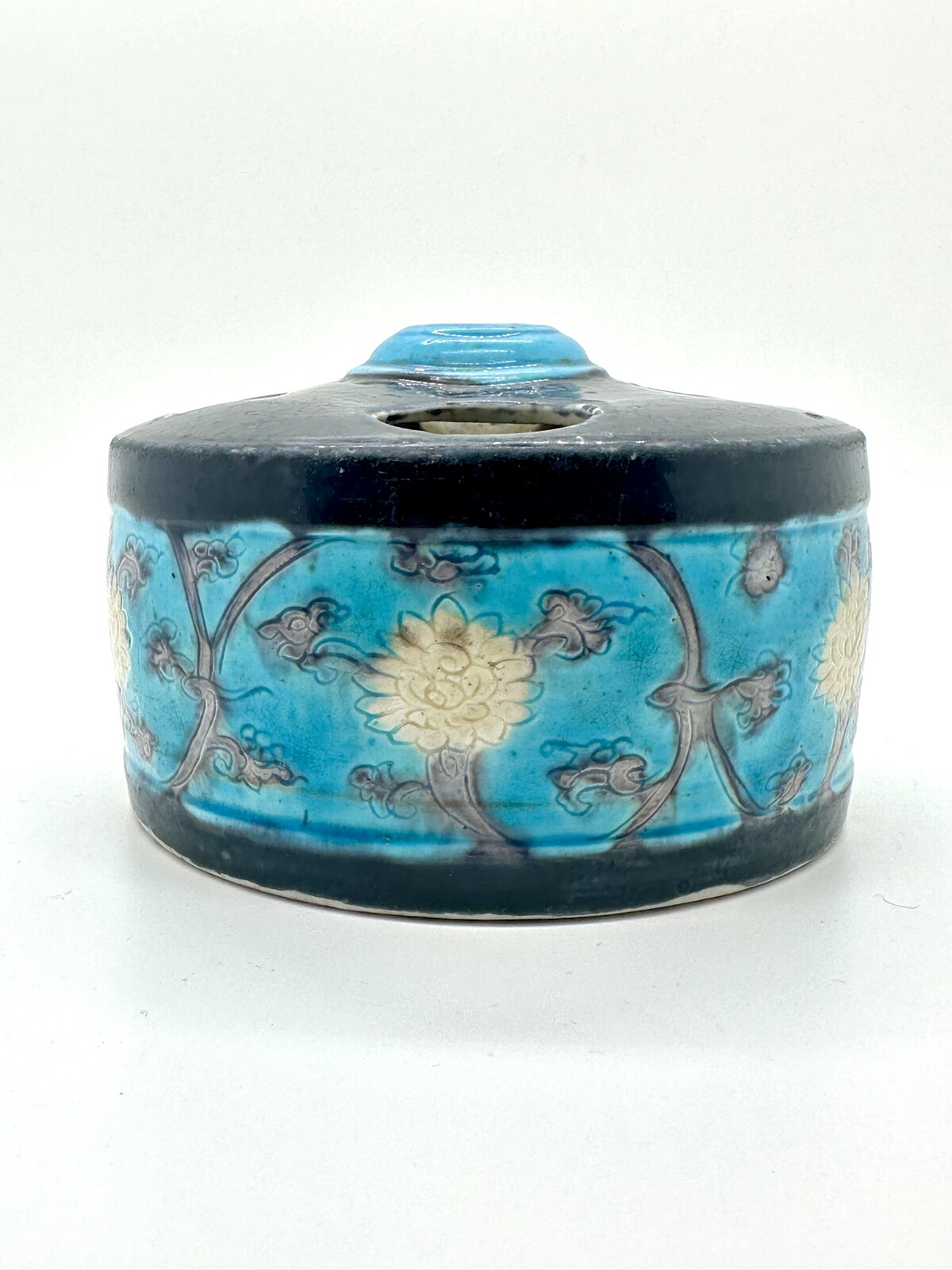
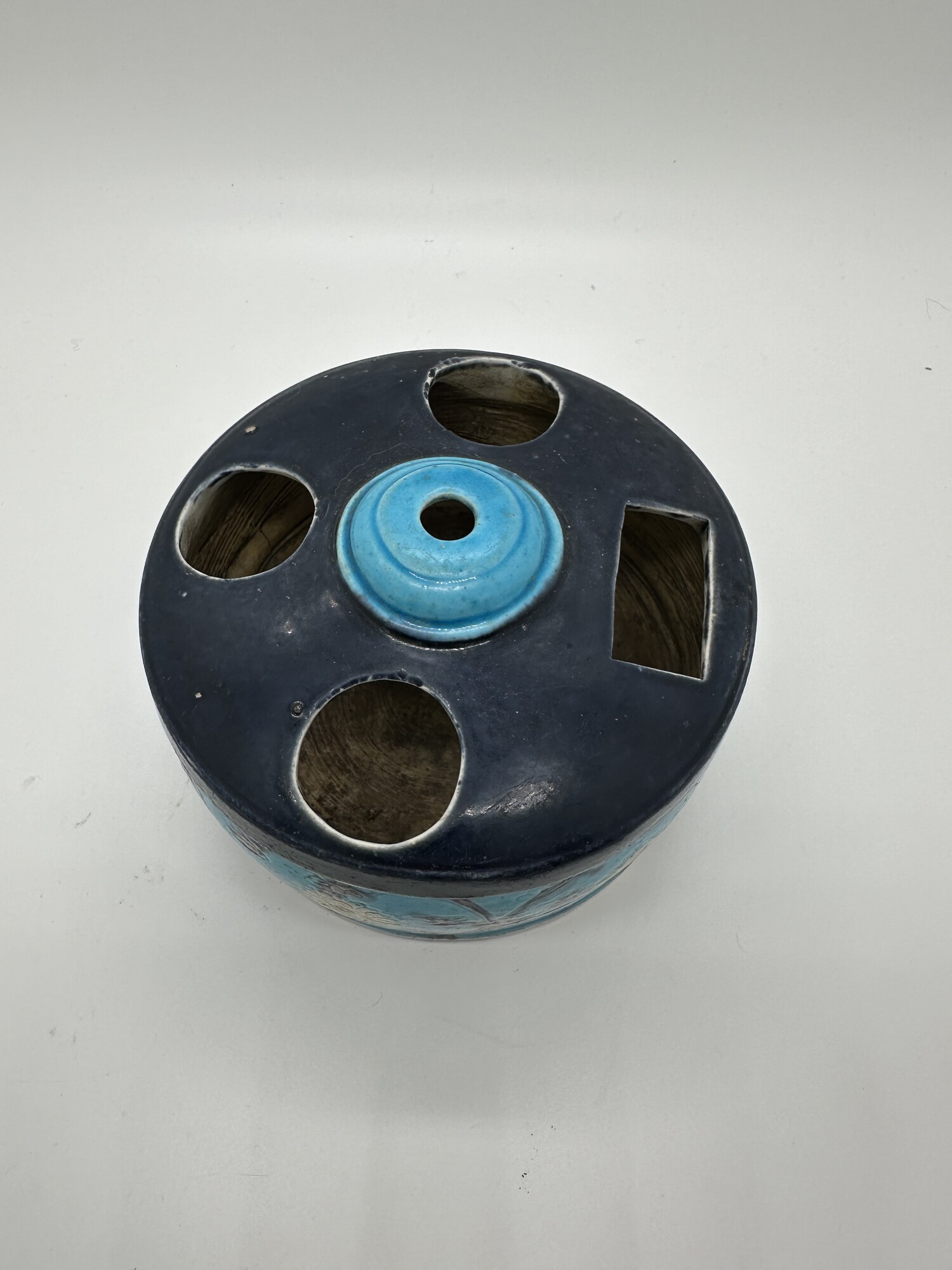
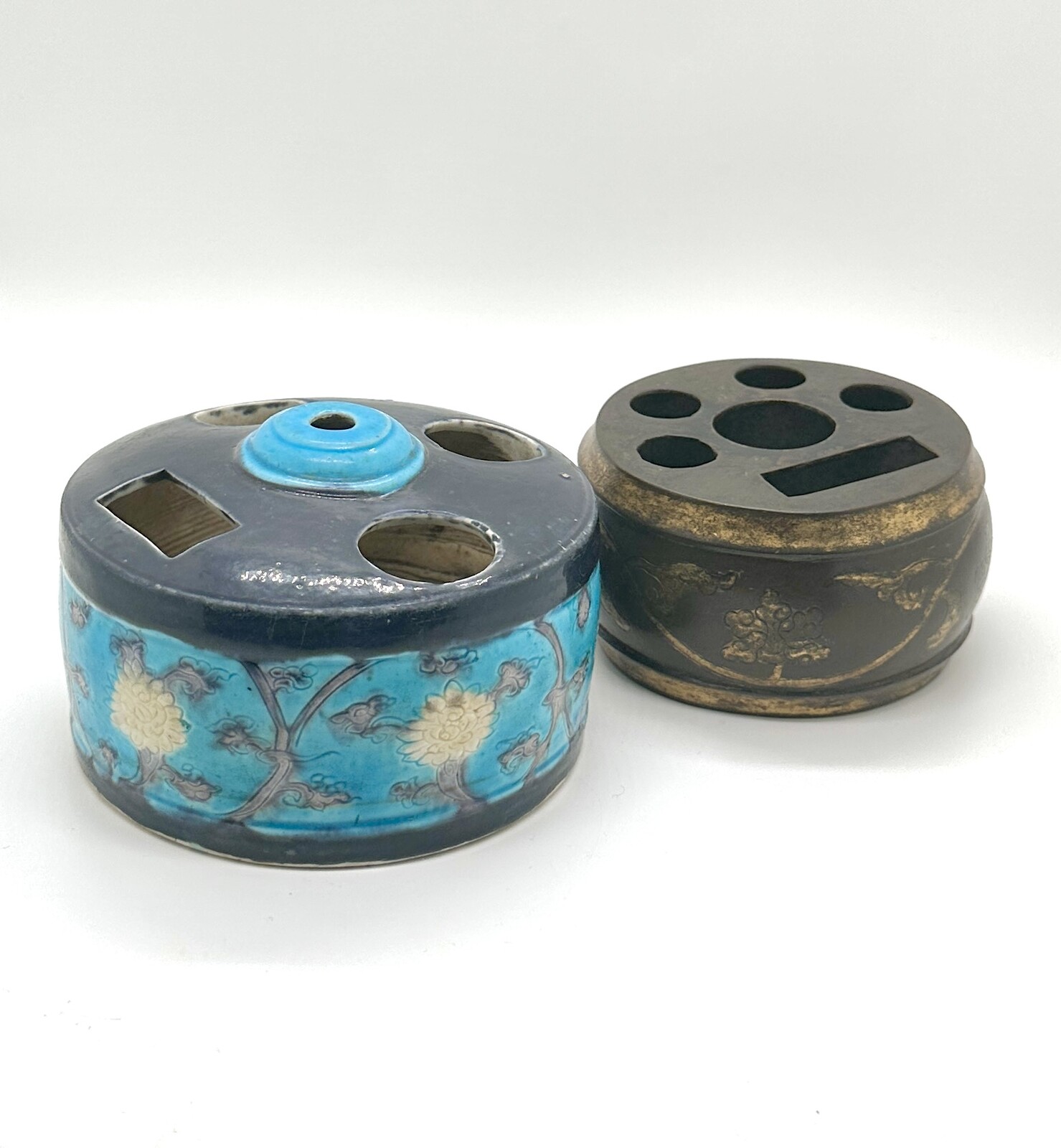
The slightly rounded sides are incised on the turquoise-blue ground with aubergine lotus scrolls and blossoms glazed in cream. The top is glazed in dark violet-blue and has three circular and one rectangular aperture encircling a turquoise central raised disc with a small circular hole.
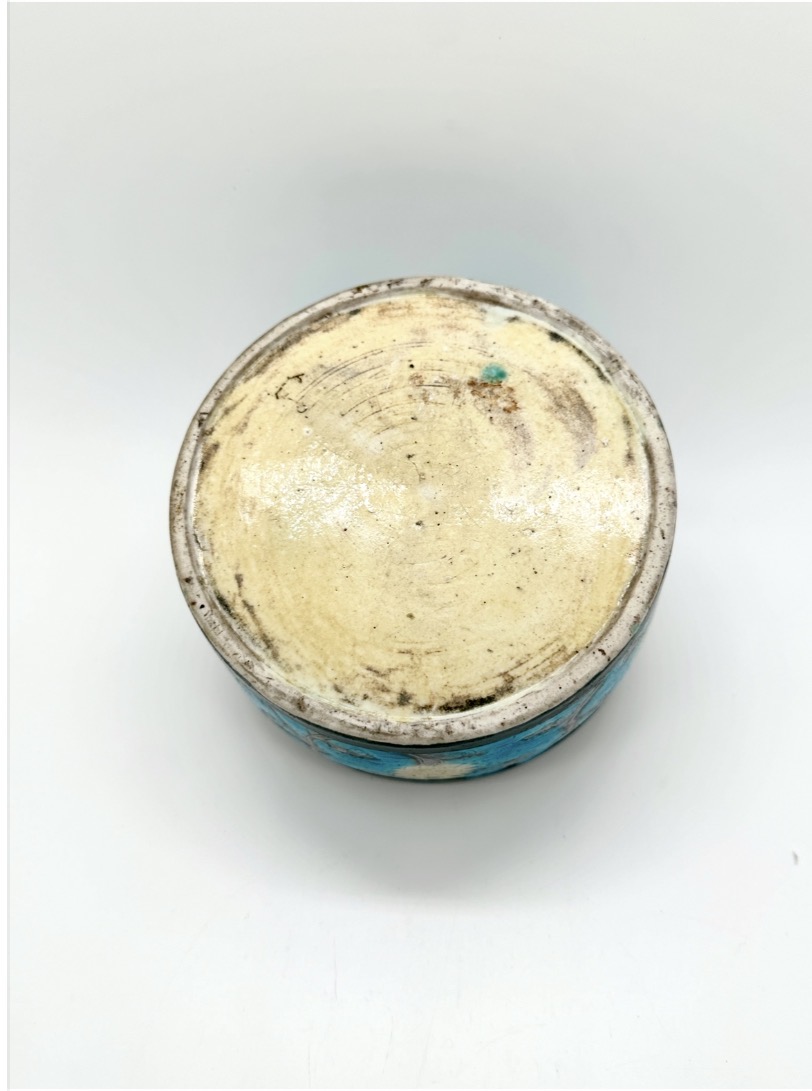
The base is partly glazed in a yellowish colour.
Diameter 13 cm
Drum-shaped brush- and inkstick holders were produced in China during a rather short period, and generally dated to the first half of the 16th century, although blue and white examples from the Wanli period (1573-1620) are known.
They usually have three or four circular and one rectangular openings at the top for holding brushes and an inkstick.
A similar fahua example incised with a four-charcter Ming mark, from the Percical David collection, is in the Victoria & Albert Museum (C 58-1935).
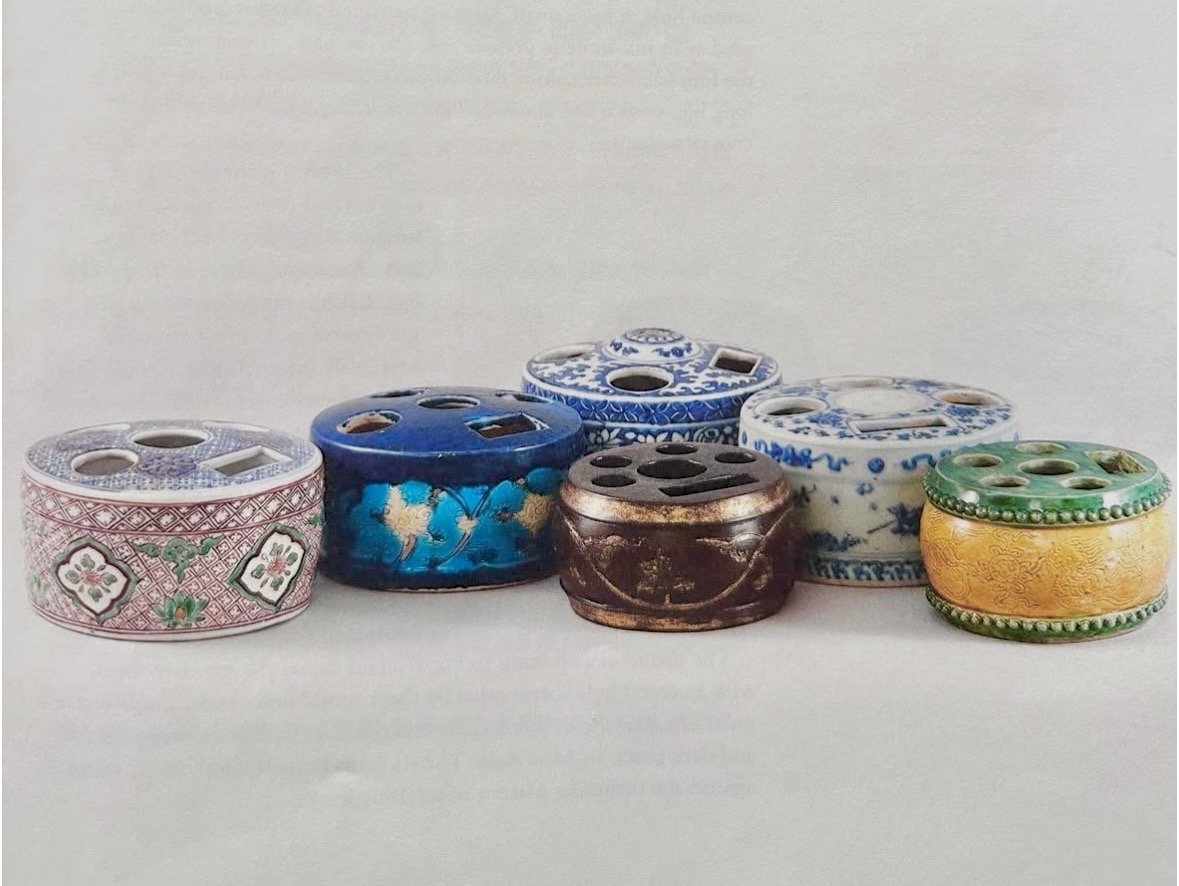
Another example, but missing the central domed disc, from the Sam Marsh collection, is illustrated in his latest publication, together with other drum-shaped brush receptables, in 'Brushpots, A Collector's View', Hong Kong 2020 (see image 9).
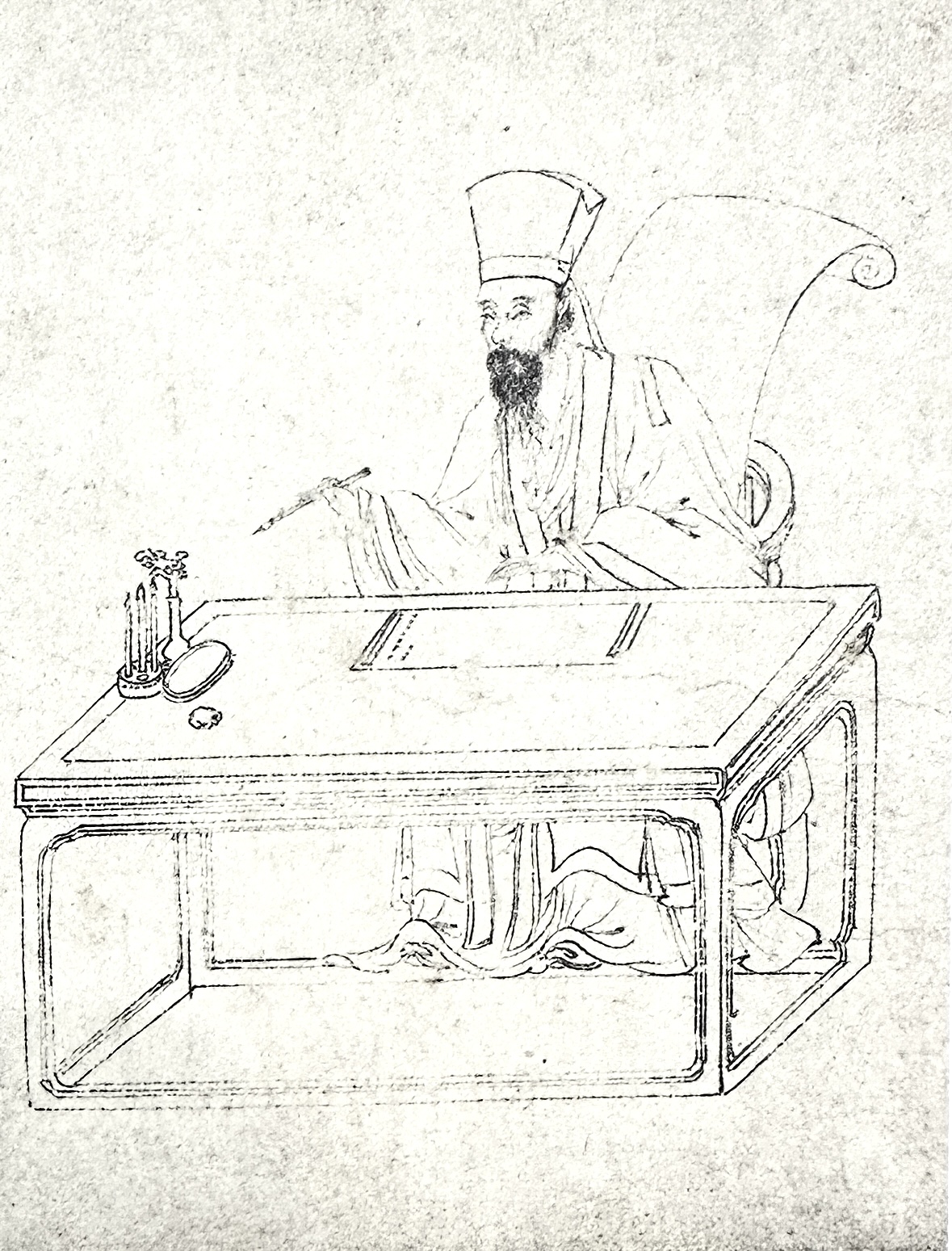
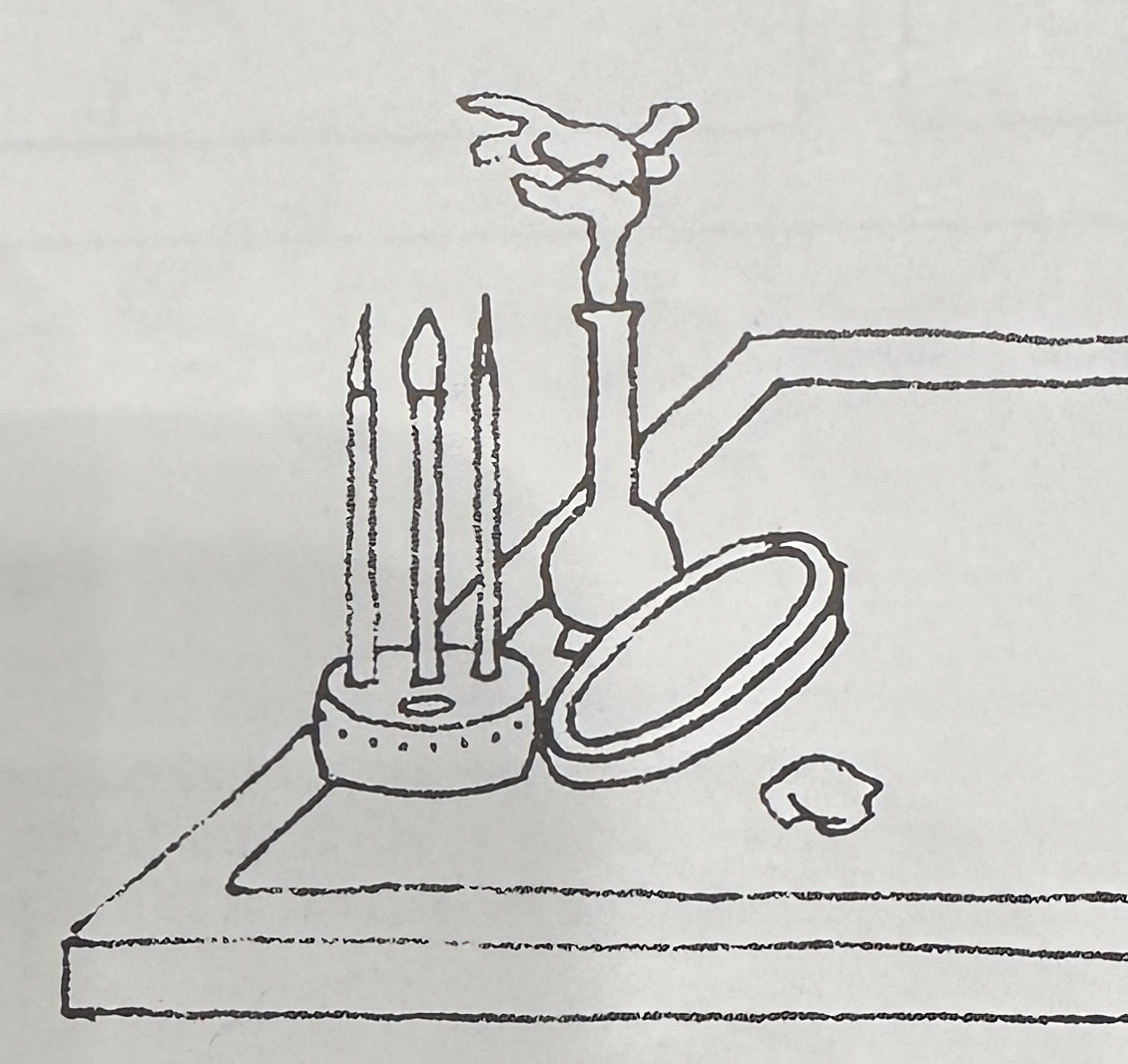
The use of these brush- and inkstick receptables becomes clear as there exists a painting of the famous philosopher Wang Yangming (1472-1529) seated at his writing desk. On the desk we can see, amongst others, a similar vessel, the circular holes holding three brushes with tips upwards (see images 5-6). It is assumed that the rectangular opening is meant to hold an inkstick. (See G. Tsang and H. Moss, 'Arts from the Scholar's Studio', Hong Kong. 1986, pp. 226-227).
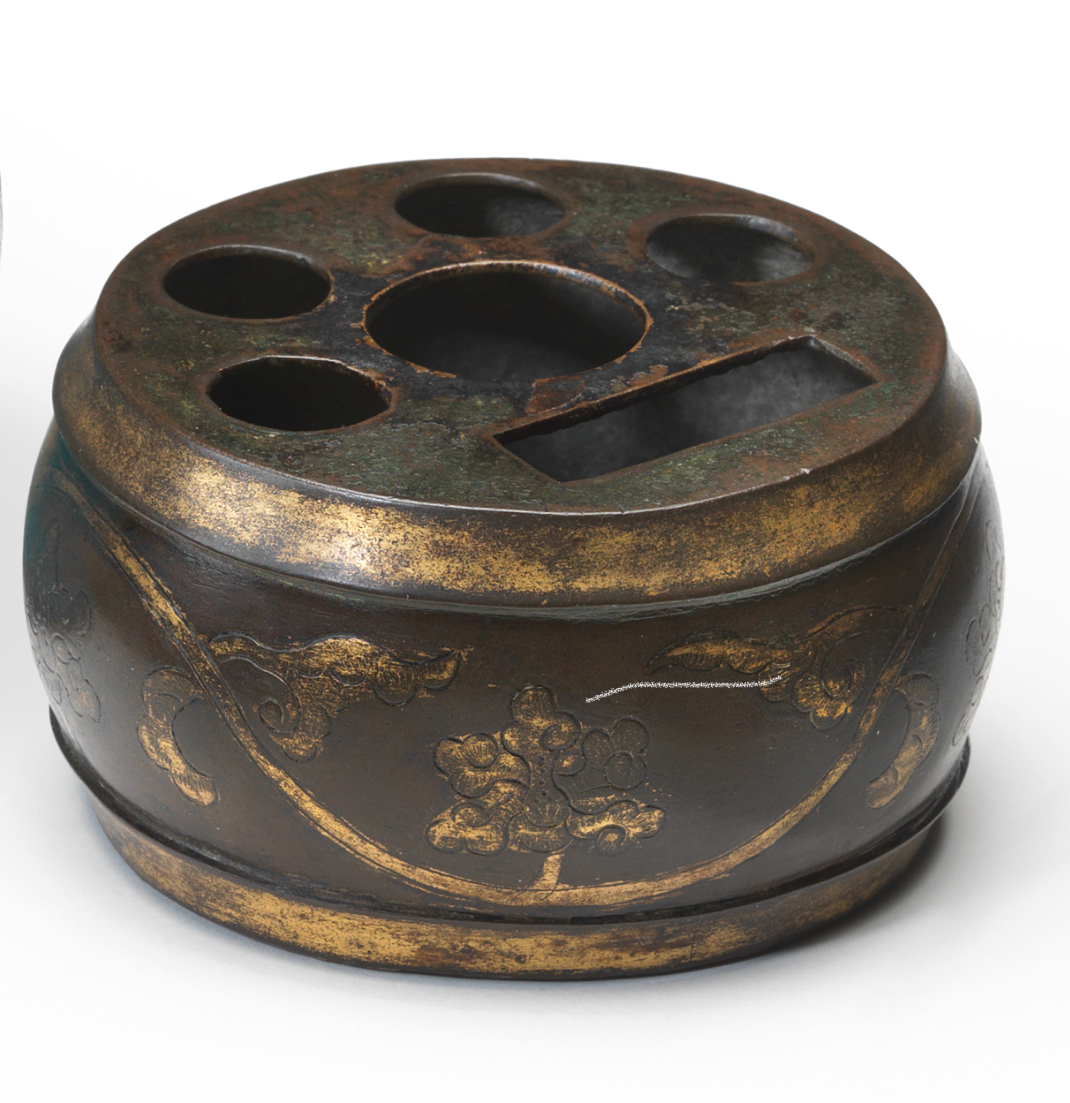
It is very rare to find similar shapes made of materials other than porcelain, such as the gilt bronze example from our collection (see images 7-9), which probably predate the Ming porcelain ones.
This very piece was formerly in the collection of Sam Marsh (provenance Nicholas Grindley), and illustrated in his latest publication, "Brushpots, A Collector's View', Hong Kong 2020, p.24, fig.5
|



 Request for more information
 See more items of this dealer
 Print
Print